Higgsfield Genjutsu Tutorial: Cat Motion Transfer
Learn Higgsfield Genjutsu Motion Transfer with cat character reference sheets, copyable JSON prompts, generation settings, and downloadable reference videos.
Guide by CoreUXReviewed
The complete guide.
Follow the steps below. Review the references, copy the original prompts, and use the recorded settings in your AI tool.
1. Create the character sheets
Start with the original photos below. Generate the orange tabby and healthy calico sheets, then use the healthy calico sheet to create her zombie version. Each prompt requests four full-body views in one row and three stacked portraits.
Image settings
These are the settings recorded for all three character-sheet generations.
Scroll sideways to see all columns.
Setting Value used Provider Higgsfield Model GPT Image 2 Variant Sunburst Aspect ratio 4:3 Resolution 2K Quality High Orange tabby
Attach these six orange-cat photos in order as @image1 through @image6, then add the earlier orange sheet shown last as @image7. The refined prompt preserves the cat's identity while putting all four body views in one row. Copy the JSON below into your image tool.
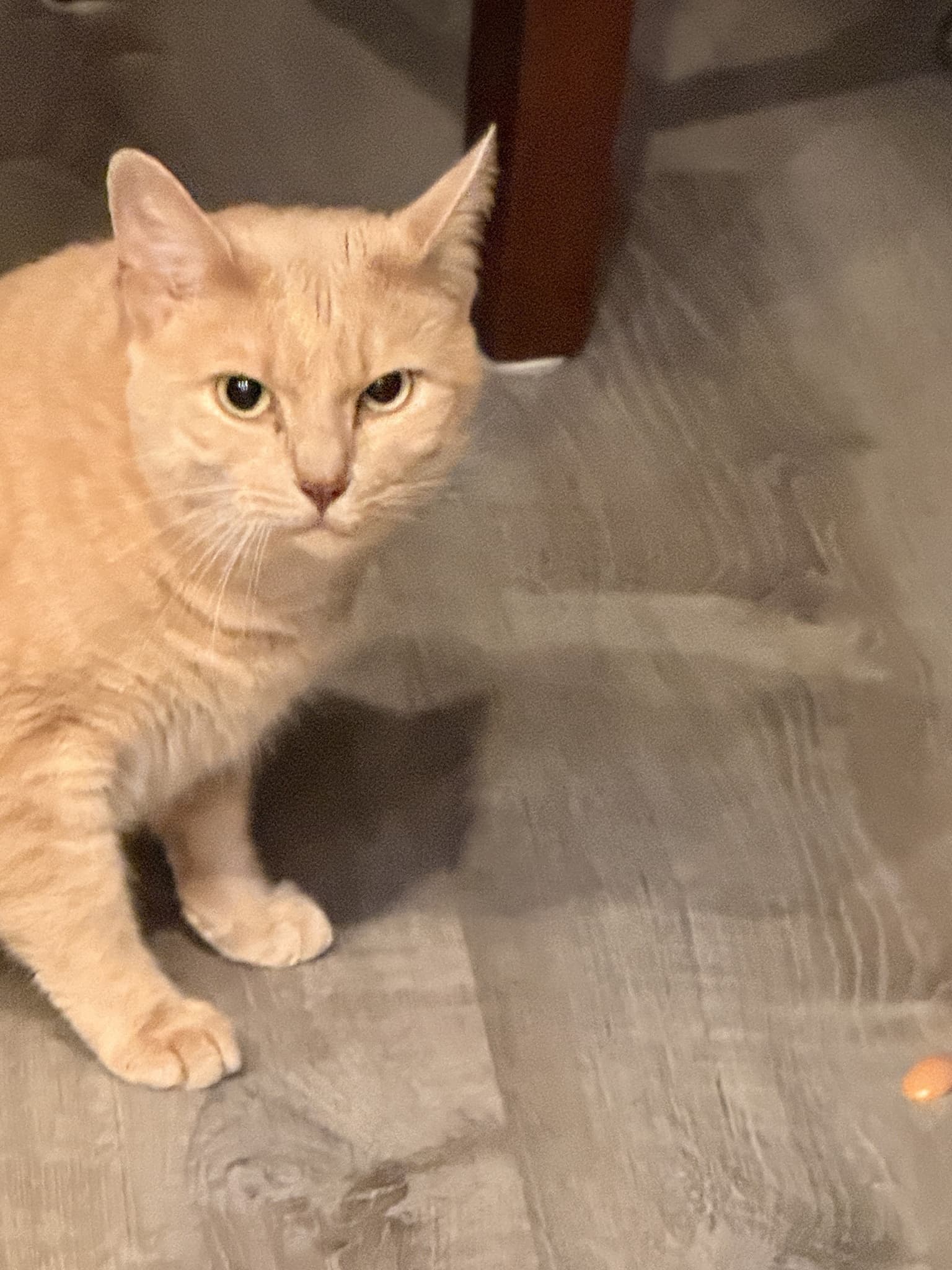
@image1 — Original orange tabby photo
View full-size image — @image1 — Original orange tabby photo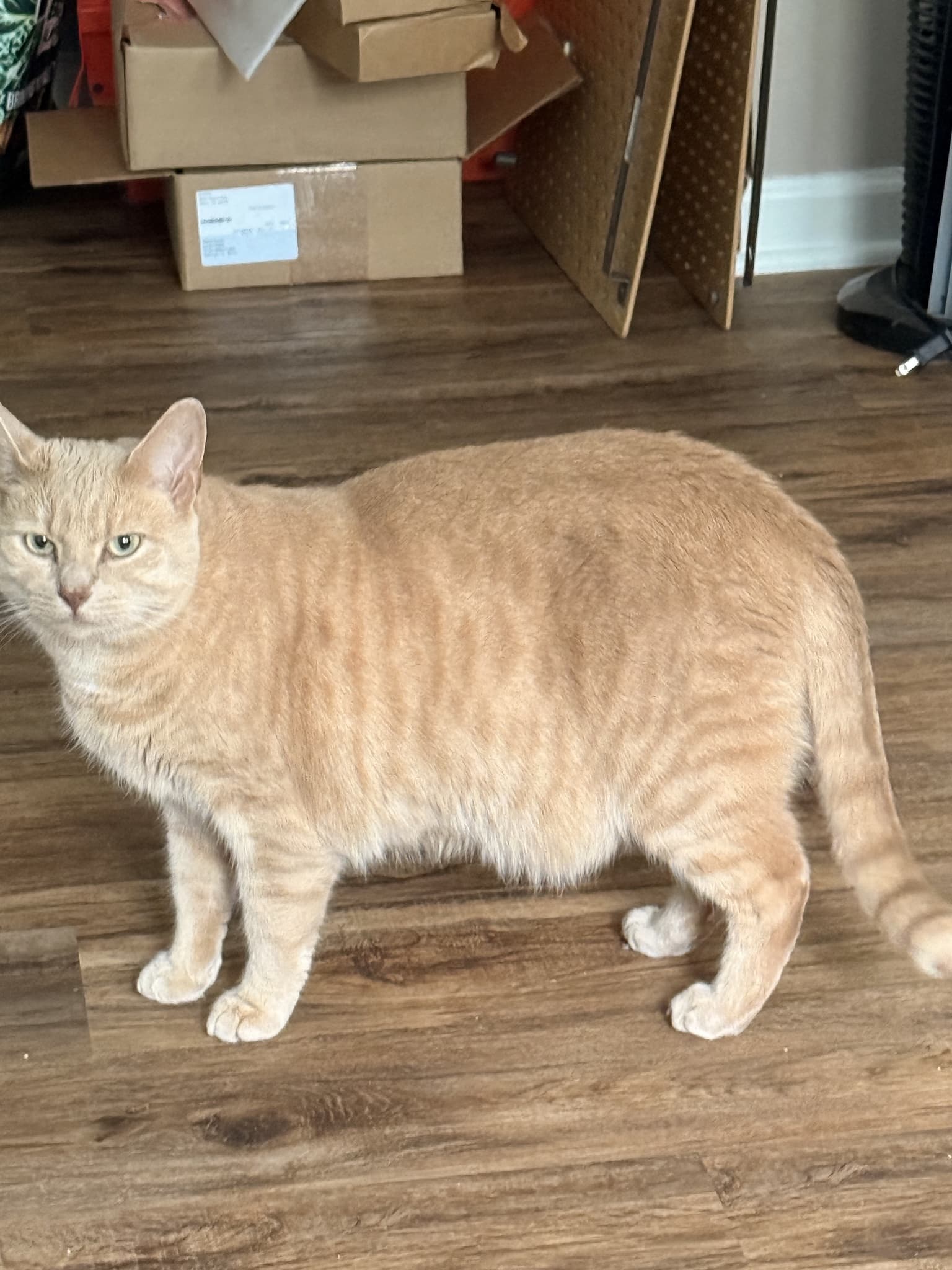
@image2 — Original orange tabby photo
View full-size image — @image2 — Original orange tabby photo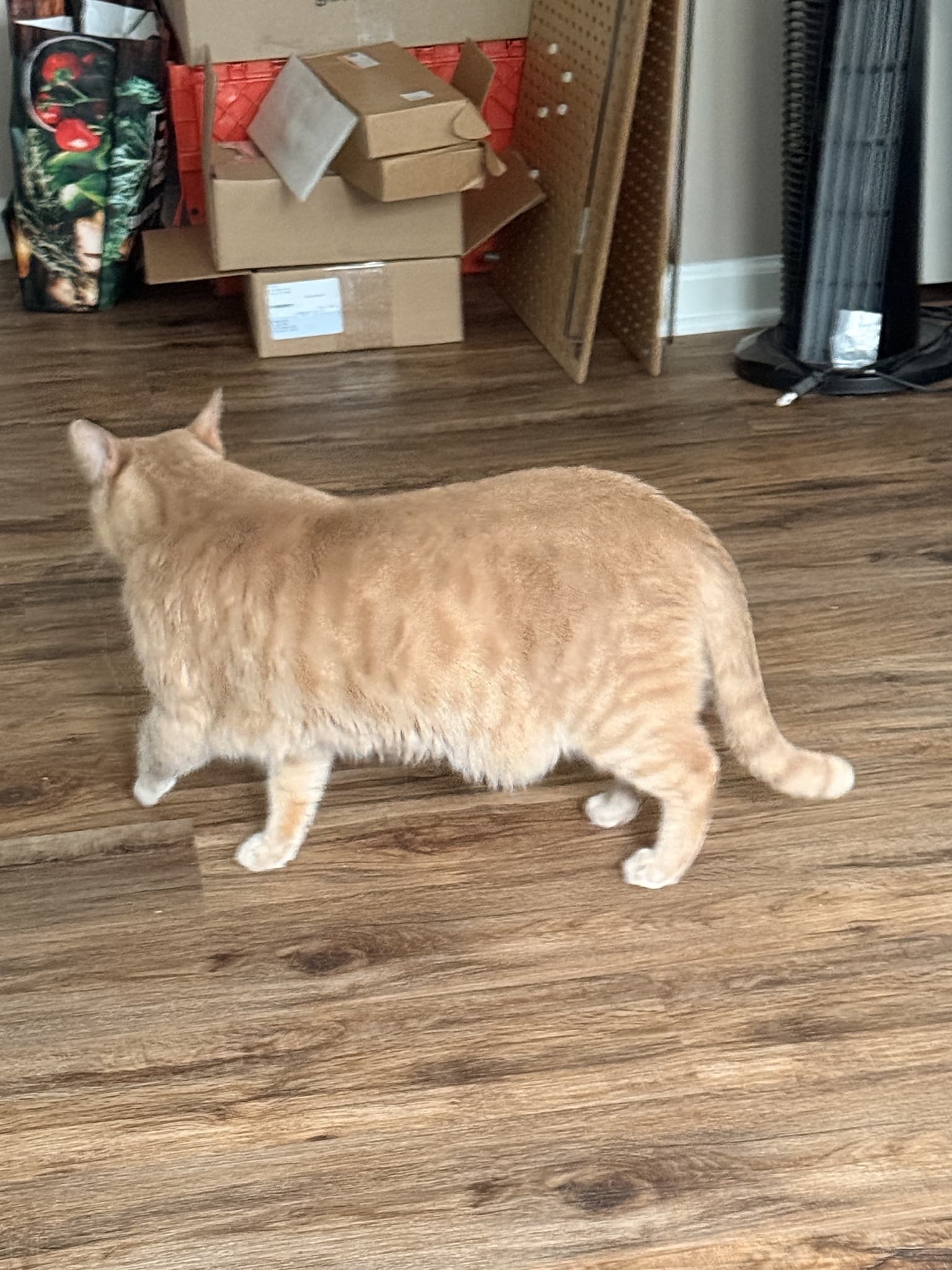
@image3 — Original orange tabby photo
View full-size image — @image3 — Original orange tabby photo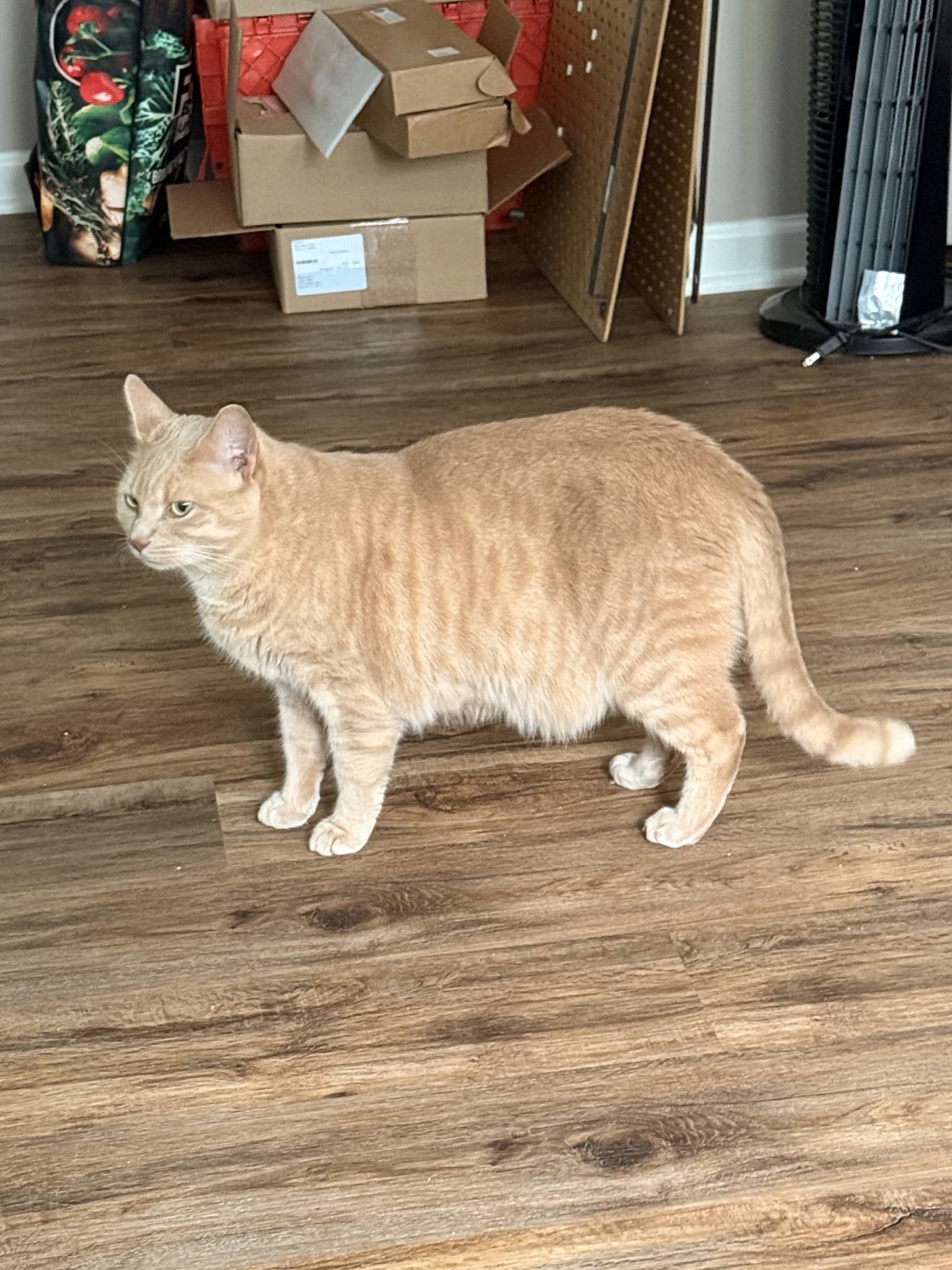
@image4 — Original orange tabby photo
View full-size image — @image4 — Original orange tabby photo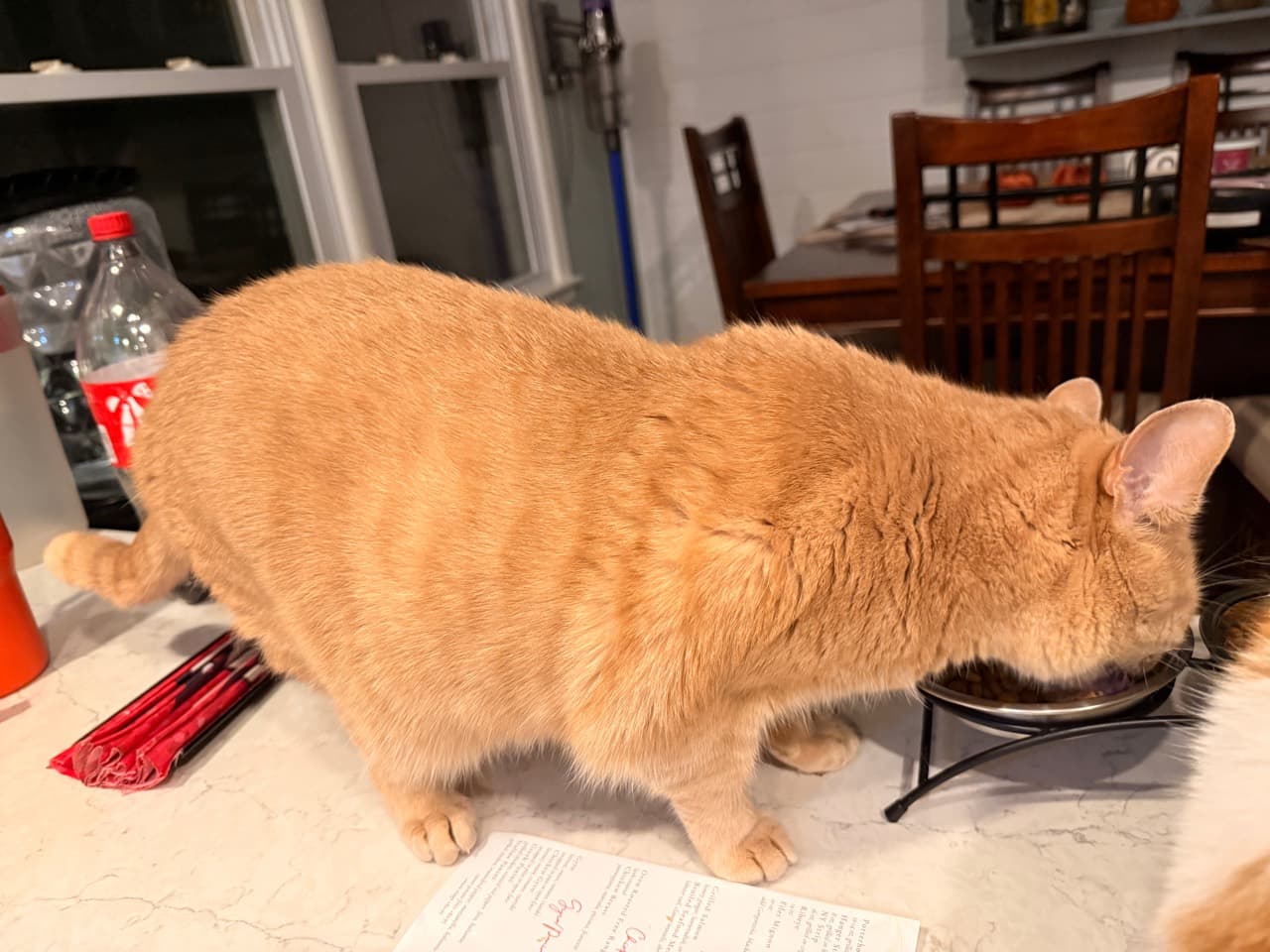
@image5 — Original orange tabby photo
View full-size image — @image5 — Original orange tabby photo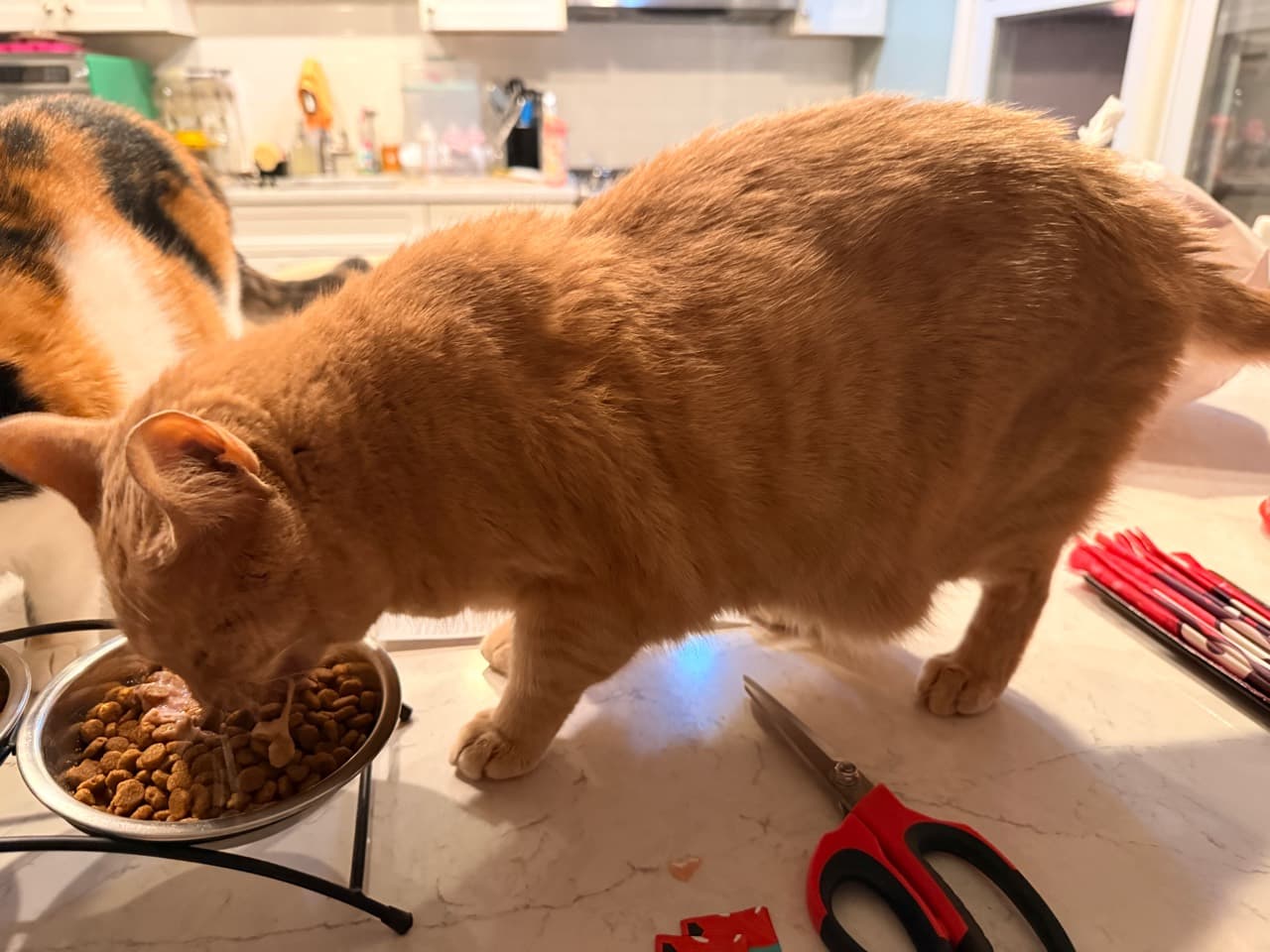
@image6 — Original orange tabby photo
View full-size image — @image6 — Original orange tabby photo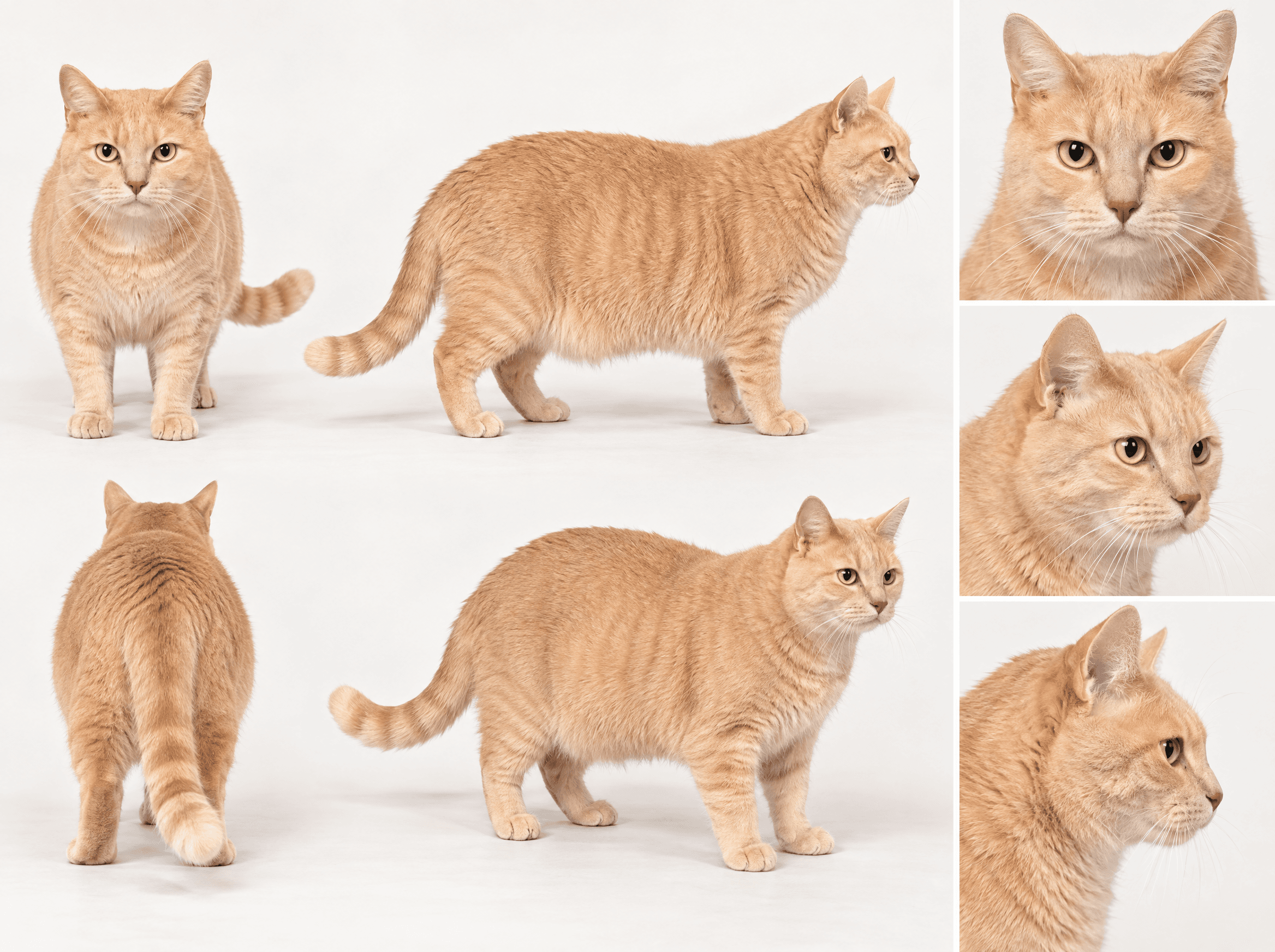
@image7 — Initial orange tabby sheet for the refinement.
View full-size image — @image7 — Initial orange tabby sheet for the refinement.Original orange-tabby JSON prompt { "task": "generate_character_reference_sheet", "input": { "reference_images": [ "@image1: face, ears, eyes and forelegs", "@image2: body proportions, face and flank stripes", "@image3: side/rear angle, legs and tail", "@image4: full standing body and tail", "@image5: opposite flank and rounded body", "@image6: side view, face profile, legs and belly", "@image7: the previously generated orange-cat sheet, for same-cat identity and photographic rendering only; replace its two-row full-body layout with the required SINGLE ROW" ], "prompt": "Create a photorealistic character reference sheet of the exact buff/light-orange tabby cat appearing in all six attached photos. Preserve this adult cat's short plush fur, very stocky barrel-shaped body, naturally rounded low-hanging belly, sturdy relatively short legs, broad rounded face and subtle ginger tabby markings. The orange cat is the sole subject; ignore the incidental calico cat visible in @image5 and @image6. Use all six photos as identity references. No accessories. Replace the home interiors, table, food bowls, furniture and other objects with the plain studio background." }, "instructions": { "identity": "Use the same individual buff/light-orange tabby cat from all six reference photos consistently across every view.", "appearance": "Preserve the reference cat's short plush pale buff/peach-orange fur, very stocky broad barrel-shaped torso, naturally rounded low-hanging belly, sturdy relatively short legs, broad rounded face, upright pointed ears with pale pink interiors, pale sage/yellow-green eyes, terracotta-pink nose, long white whiskers, pale cream muzzle, chin, upper chest, underside and paws. Preserve the subtle darker ginger tabby forehead M and cheek lines, faint vertical flank stripes and clearer bands on the legs and tail. Keep stripes low contrast and natural, with the photographed coat color rather than saturated vivid orange. The substantial medium-long tail has faint darker ginger rings, a pale rounded tip and a gentle natural curve. The cream paw coloring blends naturally into the orange legs. Preserve the actual body proportions from @image2 through @image6 without slimming the cat, exaggerating its shape or stylizing it. The photos are final authority for exact fur pattern and proportions.", "unseen_details": "Infer details not visible in the six photos conservatively from the observed pale orange tabby fur and keep them consistent across every angle. Each view is a rotation of one fixed individual with the same three-dimensional stripe map and true body proportions." }, "output": { "type": "single_composite_image", "orientation": "landscape", "aspect_ratio": "4:3", "background": "plain seamless warm-white studio backdrop", "lighting": "soft, even, consistent across all views", "text_labels": false, "rendering_style": "photorealistic studio animal photography, natural fur detail and proportions" }, "layout": { "main_section": { "position": "left", "width_percent": 75, "arrangement": "EXACTLY ONE horizontal row of four full-body cats, ordered left to right: front, side profile facing right, rear, front three-quarter facing right. All four stand on the SAME single ground line. Scale the four cats down to fit as one row inside the left 75%. Leave generous empty studio space above and below that row. This is not a 2-by-2 grid.", "alignment": "all four cats have the same body scale and exactly the same paw baseline; every head and shoulder at comparable height, with generous gaps and entire tails inside their own view areas", "shots": [ { "id": "full_body_front", "order": 1, "view": "front", "framing": "entire cat, including both ears, all four paws and the entire tail", "orientation": "facing directly toward camera" }, { "id": "full_body_profile", "order": 2, "view": "side profile", "framing": "entire cat, including both ears, all four paws and the entire tail", "orientation": "turned 90 degrees from front, nose pointing toward image right" }, { "id": "full_body_back", "order": 3, "view": "rear", "framing": "entire cat, including both ears, all four paws and the entire tail", "orientation": "turned 180 degrees from front, facing directly away from camera" }, { "id": "full_body_three_quarter", "order": 4, "view": "front three-quarter", "framing": "entire cat, including both ears, all four paws and the entire tail", "orientation": "turned approximately 45 degrees from front, facing toward image right" } ] }, "detail_section": { "position": "right", "width_percent": 25, "arrangement": "three vertically stacked portrait panels", "alignment": "consistent head scale and comparable crop", "shots": [ { "id": "portrait_front", "order": 1, "view": "front", "framing": "cat head and upper chest, including both ears, whole chin and whiskers", "orientation": "facing directly toward camera" }, { "id": "portrait_three_quarter", "order": 2, "view": "front three-quarter", "framing": "cat head and upper chest, including both ears, whole chin and whiskers", "orientation": "turned approximately 45 degrees from front, nose pointing toward image right" }, { "id": "portrait_profile", "order": 3, "view": "side profile", "framing": "cat head and upper chest, including both ears, whole chin and whiskers", "orientation": "turned 90 degrees from front, nose pointing toward image right" } ] } }, "pose_and_camera": { "full_body_pose": "natural relaxed standing quadruped pose on all four paws, legs comfortably spaced, tail held in a gentle natural curve and completely visible, no human posture", "expression": "calm, alert, neutral and consistent; eyes open, mouth closed", "head_alignment": "head aligned with the body's rotation for each angle, including a true rear view", "perspective": "natural proportions with minimal lens distortion", "camera_roll": "level", "full_body_camera_height": "approximately the cat's mid-torso height", "portrait_camera_height": "eye level" }, "constraints": [ "Generate exactly four full-body cat views and three cat portraits.", "Show the same individual cat with the same fixed coat markings in every shot.", "Keep each cat figure separate with no overlap.", "Do not crop ears, paws or any part of the tail in full-body shots.", "Keep the entire ears, face, chin and whiskers visible in portraits.", "Maintain anatomical left and right consistently; do not mirror asymmetric facial, leg or coat details.", "Keep lighting, background, proportions and photorealistic rendering style consistent.", "Use natural feline anatomy with four legs and one tail, no anthropomorphism or accessories.", "Do not add text, labels, watermarks, panel borders, sunburst graphics or decorative elements.", "The buff/light-orange tabby is the only subject. Do not transfer any calico black patches, white blaze or sharply defined white socks from the incidental other cat in @image5 and @image6.", "Mandatory layout: four full-body views in ONE horizontal row on the left, all on one baseline; never stack full-body views, never use two rows or a 2-by-2 grid. Only the three head portraits form a vertical stack on the right." ] }Download the orange-tabby prompt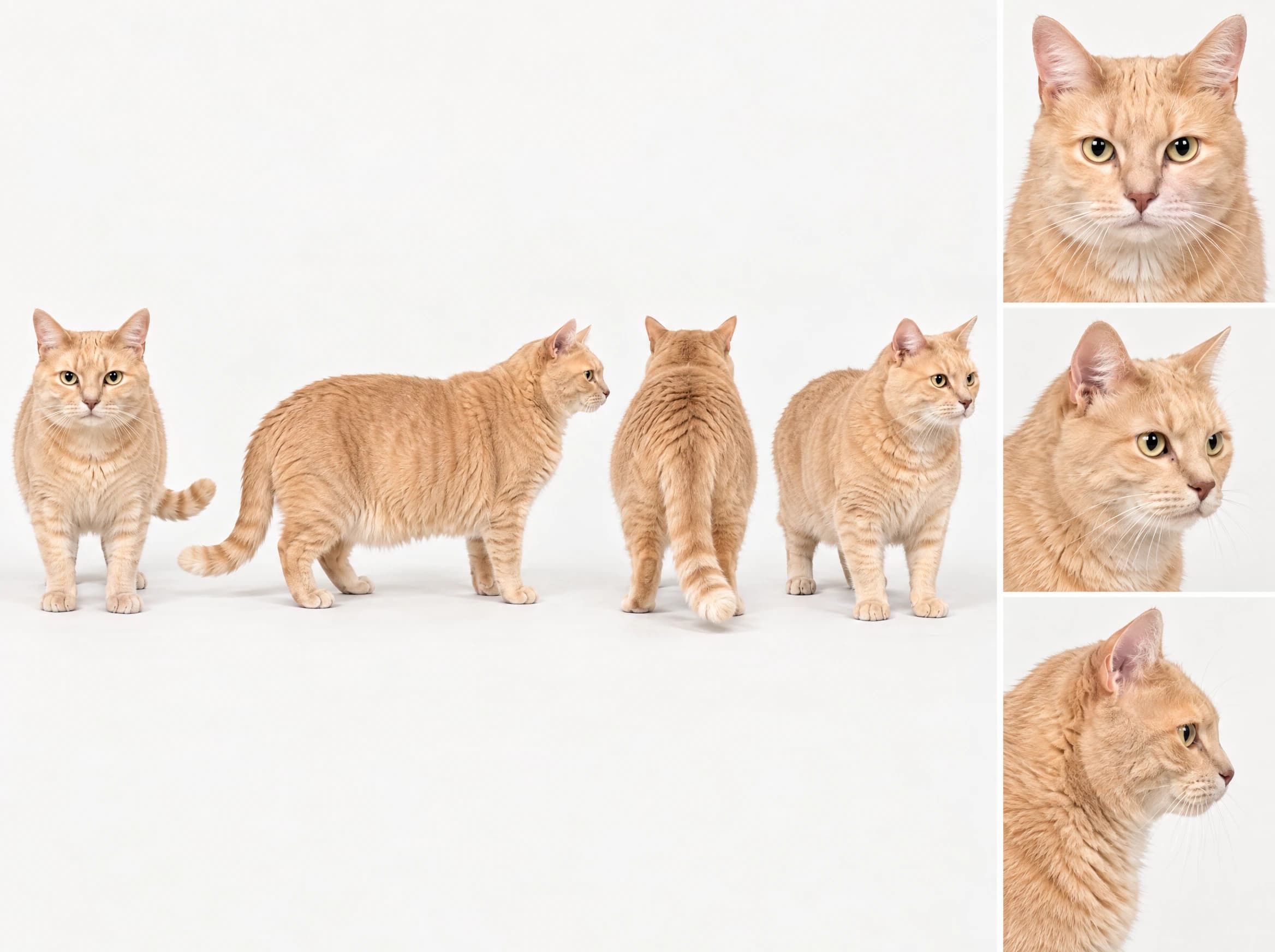
Final orange tabby character sheet — @image1 in the video generation.
View full-size image — Final orange tabby character sheet — @image1 in the video generation.Healthy calico
Attach these six calico photos in order as @image1 through @image6. The prompt preserves her rounded proportions, coat pattern, white facial blaze, and black patch on her anatomical left cheek. Generate and save this healthy sheet before creating the zombie version.
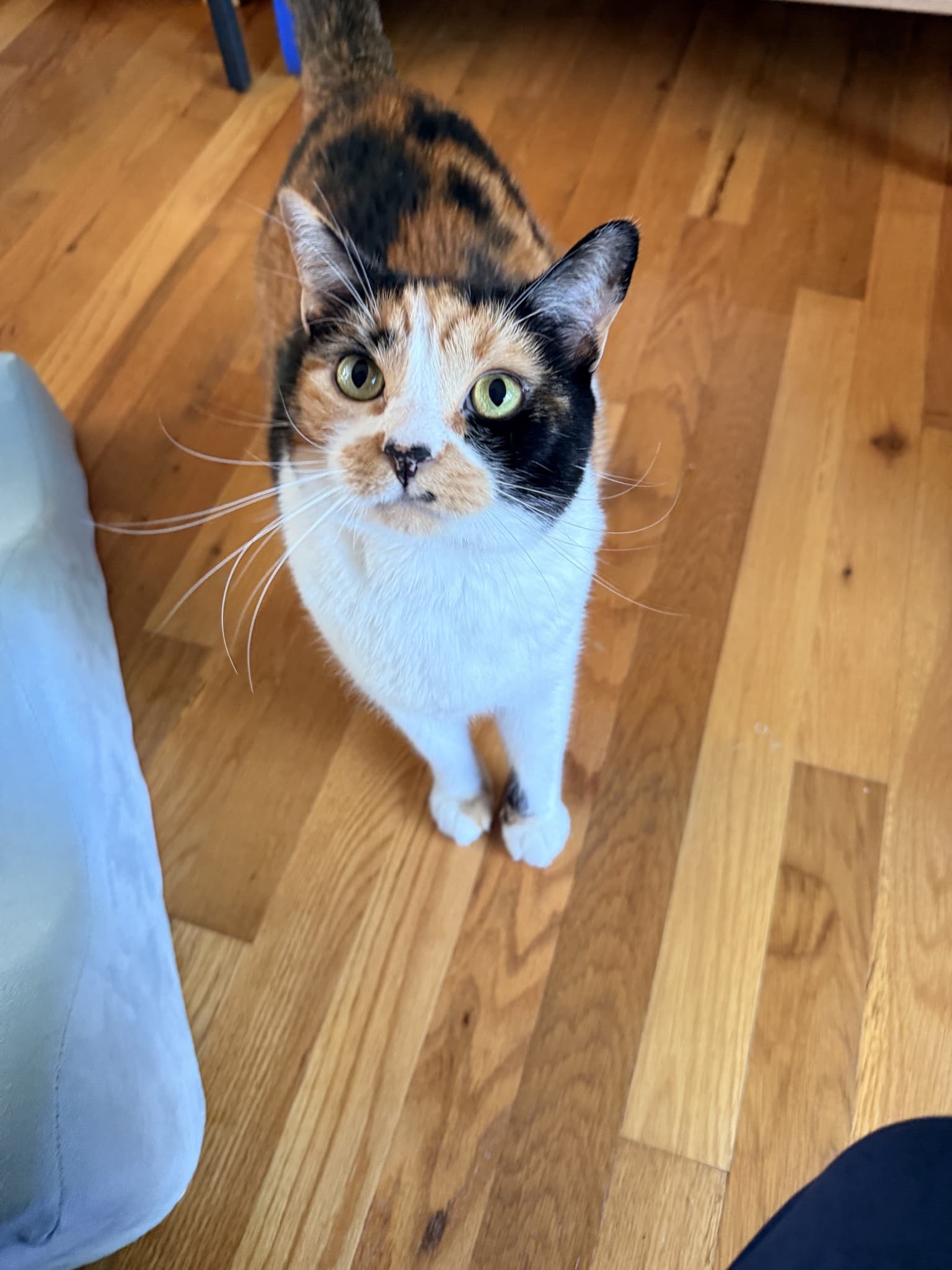
@image1 — Original calico photo
View full-size image — @image1 — Original calico photo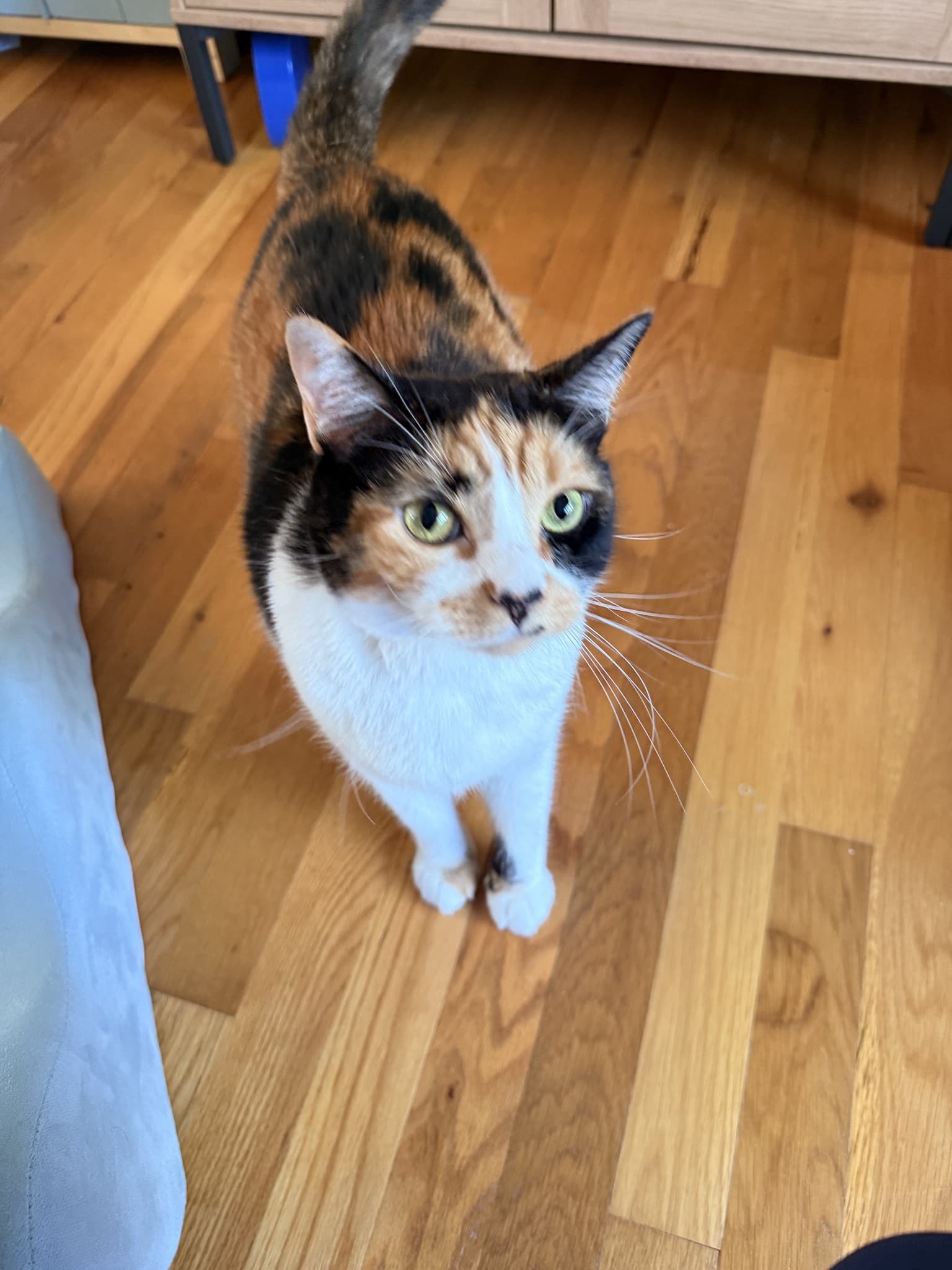
@image2 — Original calico photo
View full-size image — @image2 — Original calico photo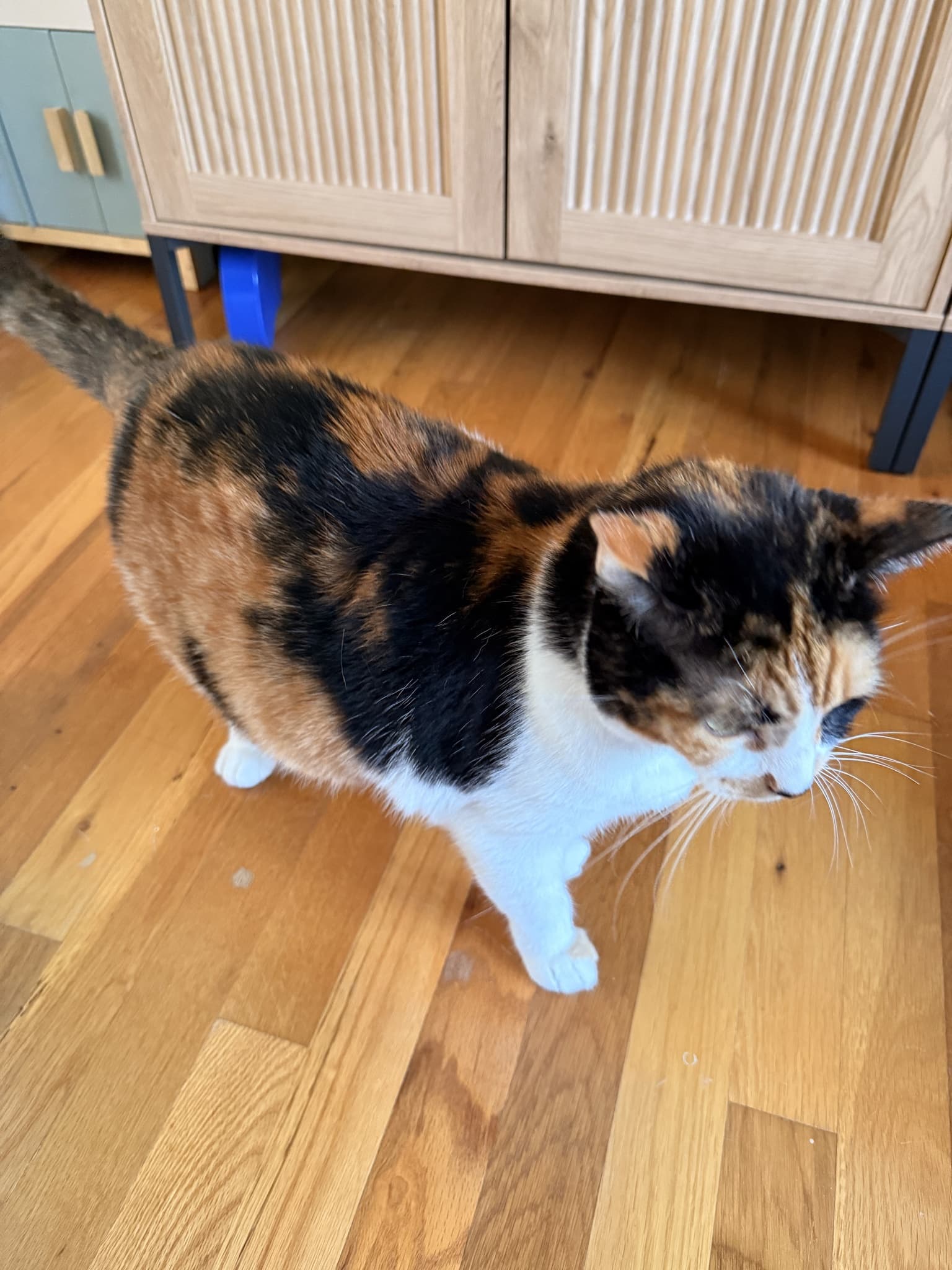
@image3 — Original calico photo
View full-size image — @image3 — Original calico photo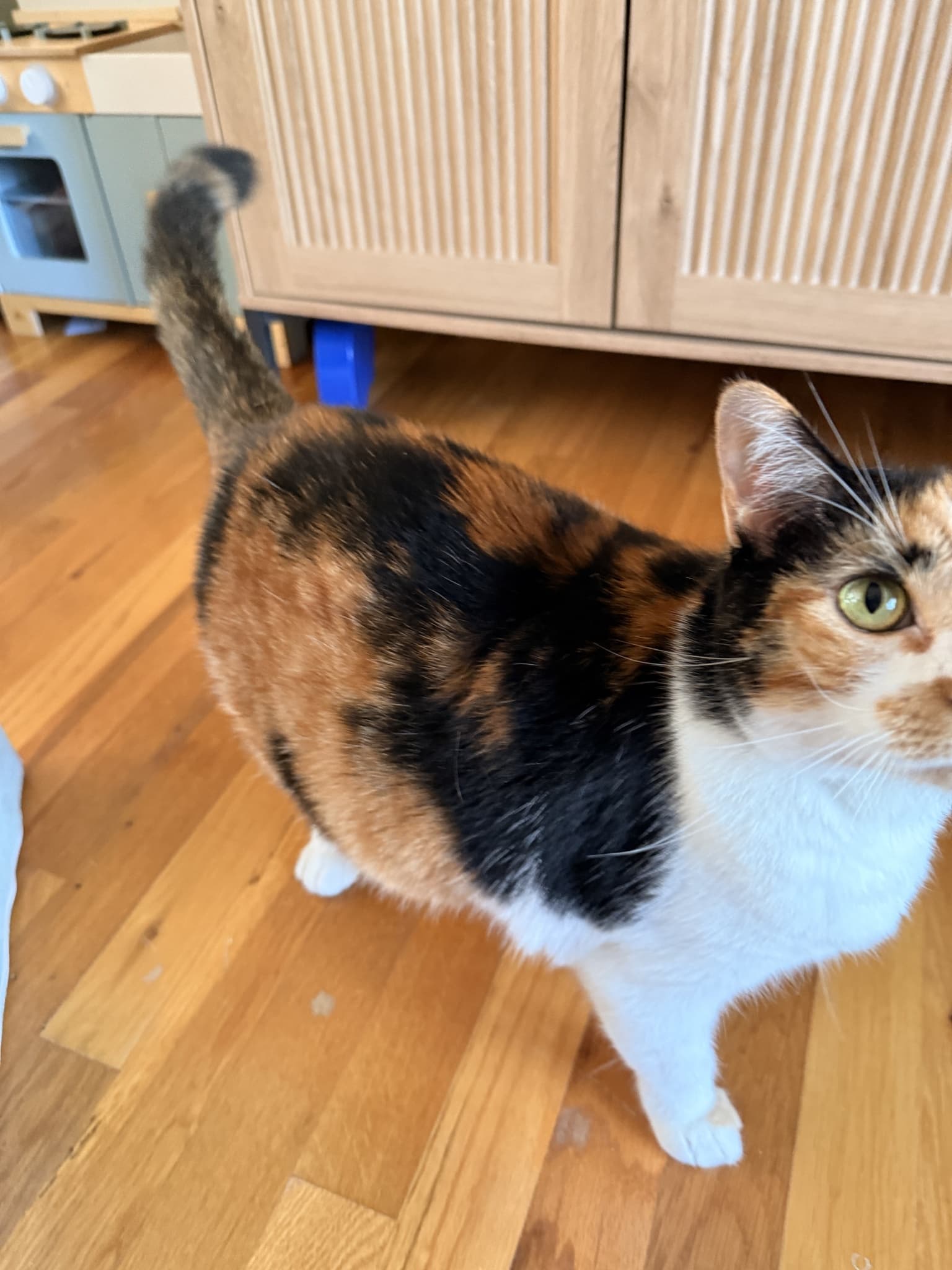
@image4 — Original calico photo
View full-size image — @image4 — Original calico photo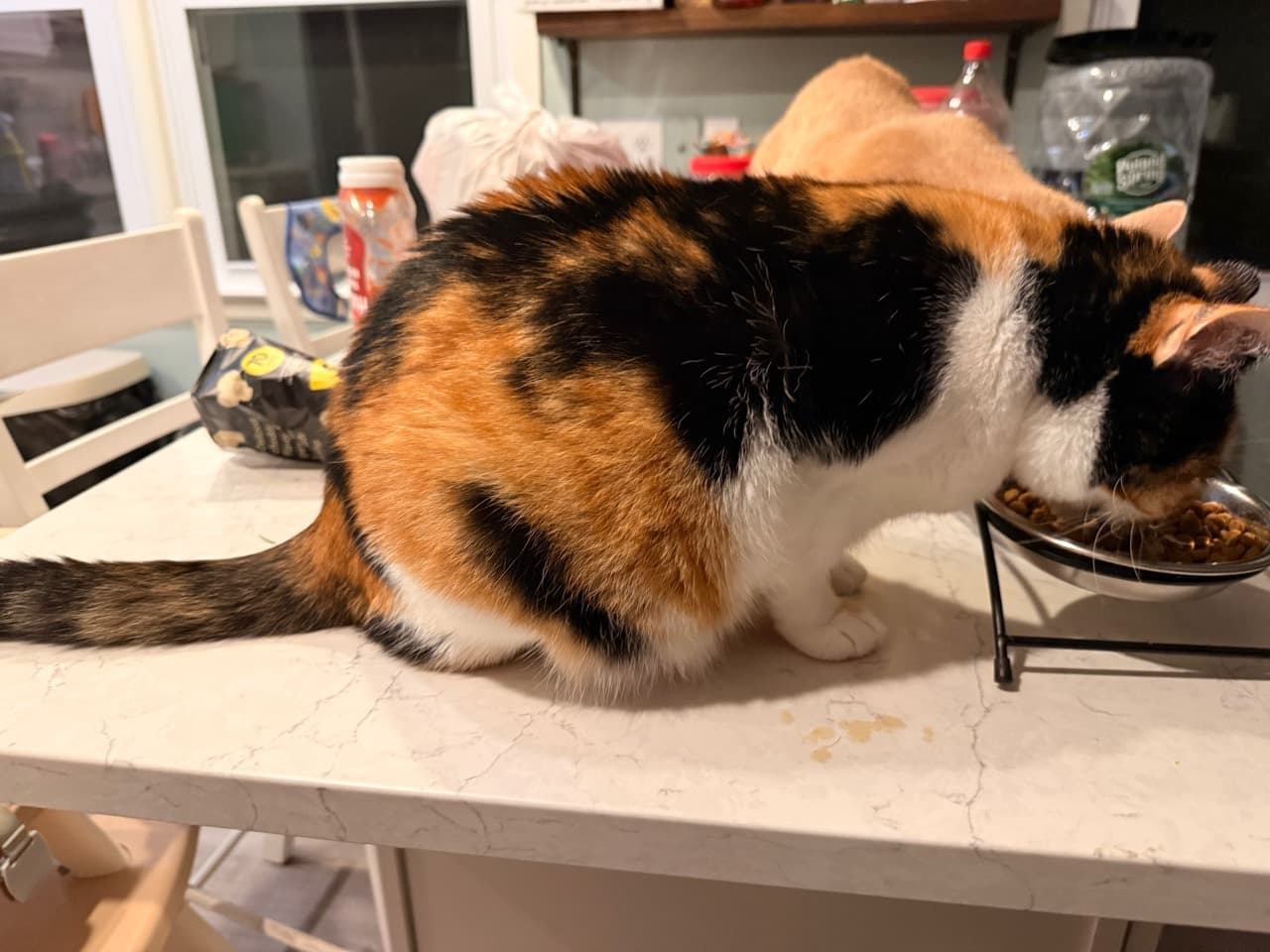
@image5 — Original calico photo
View full-size image — @image5 — Original calico photo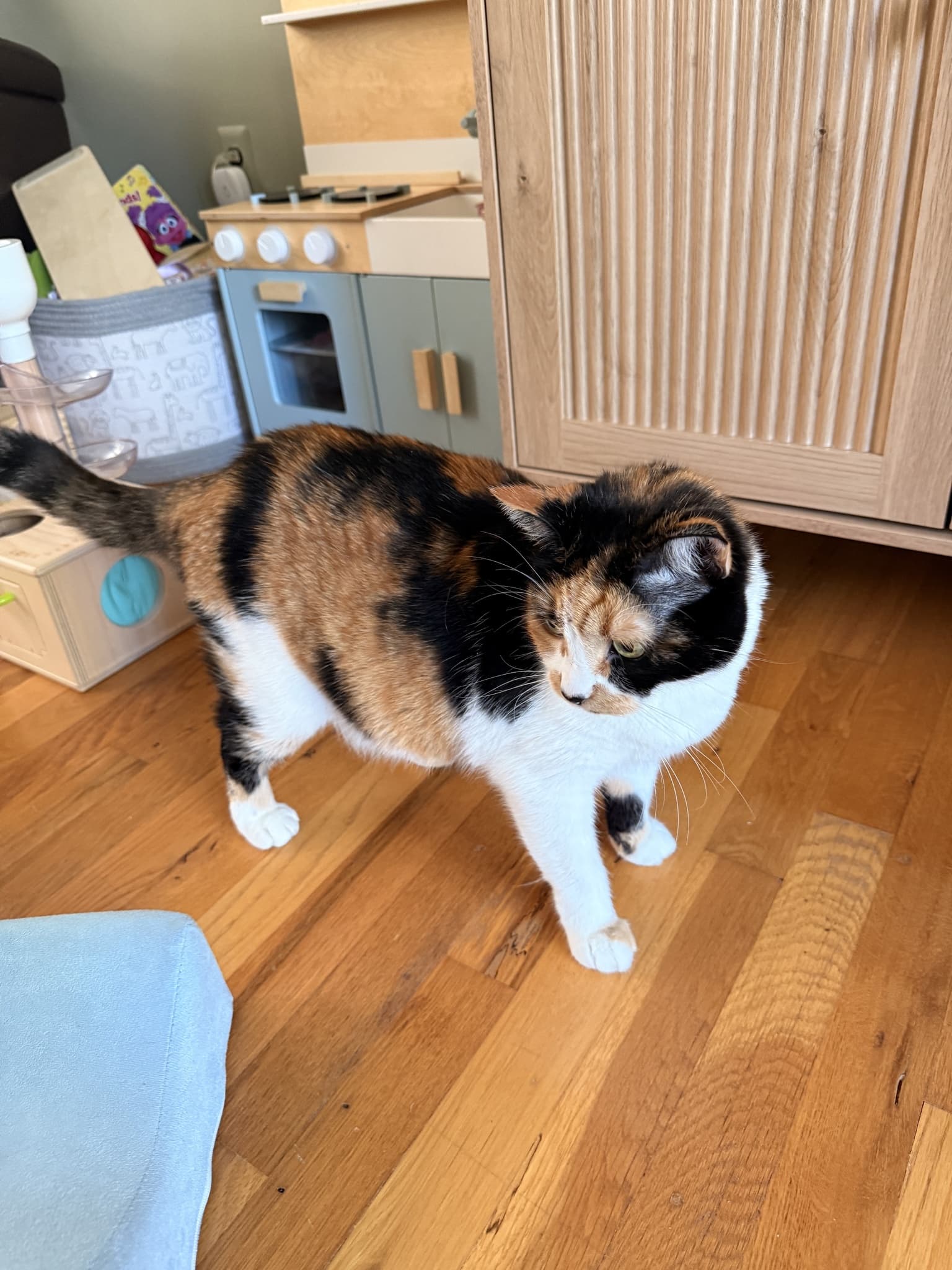
@image6 — Original calico photo
View full-size image — @image6 — Original calico photoOriginal healthy-calico JSON prompt { "task": "generate_character_reference_sheet", "input": { "reference_images": [ "@image1: front face and chest", "@image2: front three-quarter head", "@image3: flank and back markings", "@image4: flank, back and tail markings", "@image5: side profile and body proportions", "@image6: standing body, paw and leg markings" ], "prompt": "Create a photorealistic character reference sheet of this exact real calico cat, using all six attached photos as identity references. Preserve the cat's true adult short-haired, sturdy rounded build, natural quadruped anatomy, coat color distribution, asymmetric facial markings, pale yellow-green eyes, dark mottled nose and long white whiskers. No accessories or wardrobe. Discard the home interiors, table, bowl and furniture in the reference photos." }, "instructions": { "identity": "Use the same individual calico cat from all six reference photos consistently across every view.", "appearance": "Preserve the reference cat's short fur, sturdy rounded body, orange-and-black patchwork back and flanks, white chest, underside and legs with white paws, long dark mottled tail, pale yellow-green eyes, small dark mottled nose and long white whiskers. Preserve the asymmetric face: the cat's anatomical left eye and cheek (viewer right in a frontal view) have a large black patch; the anatomical right side (viewer left in a frontal view) is mostly warm orange, with dark markings toward the outer ear/head. Preserve the central white blaze descending along the forehead and nose bridge. Preserve the dark patch above the anatomical left front paw and other visible leg markings. Use the photographs as final authority for exact patch boundaries; do not simplify into generic calico markings.", "unseen_details": "Infer details not visible in the six photos conservatively from the observed coat pattern and keep them consistent across every angle. Each angle is a rotation of one fixed individual with the same three-dimensional coat map, never a new random calico pattern or mirrored copy." }, "output": { "type": "single_composite_image", "orientation": "landscape", "aspect_ratio": "4:3", "background": "plain seamless warm-white studio backdrop", "lighting": "soft, even, consistent across all views", "text_labels": false, "rendering_style": "photorealistic studio animal photography, natural fur detail and proportions" }, "layout": { "main_section": { "position": "left", "width_percent": 75, "arrangement": "four full-body views in one horizontal row", "alignment": "consistent body scale, shoulder/head height and ground line; fit all four cat views within the left 75% with generous separation and entire tails visible", "shots": [ { "id": "full_body_front", "order": 1, "view": "front", "framing": "entire cat, including both ears, all four paws and the entire tail", "orientation": "facing directly toward camera" }, { "id": "full_body_profile", "order": 2, "view": "side profile", "framing": "entire cat, including both ears, all four paws and the entire tail", "orientation": "turned 90 degrees from front, nose pointing toward image right" }, { "id": "full_body_back", "order": 3, "view": "rear", "framing": "entire cat, including both ears, all four paws and the entire tail", "orientation": "turned 180 degrees from front, facing directly away from camera" }, { "id": "full_body_three_quarter", "order": 4, "view": "front three-quarter", "framing": "entire cat, including both ears, all four paws and the entire tail", "orientation": "turned approximately 45 degrees from front, facing toward image right" } ] }, "detail_section": { "position": "right", "width_percent": 25, "arrangement": "three vertically stacked portrait panels", "alignment": "consistent head scale and comparable crop", "shots": [ { "id": "portrait_front", "order": 1, "view": "front", "framing": "cat head and upper chest, including both ears, whole chin and whiskers", "orientation": "facing directly toward camera" }, { "id": "portrait_three_quarter", "order": 2, "view": "front three-quarter", "framing": "cat head and upper chest, including both ears, whole chin and whiskers", "orientation": "turned approximately 45 degrees from front, nose pointing toward image right" }, { "id": "portrait_profile", "order": 3, "view": "side profile", "framing": "cat head and upper chest, including both ears, whole chin and whiskers", "orientation": "turned 90 degrees from front, nose pointing toward image right" } ] } }, "pose_and_camera": { "full_body_pose": "natural relaxed standing quadruped pose on all four paws, legs comfortably spaced, tail held in a gentle natural curve and completely visible, no human posture", "expression": "calm, alert, neutral and consistent; eyes open, mouth closed", "head_alignment": "head aligned with the body's rotation for each angle, including a true rear view", "perspective": "natural proportions with minimal lens distortion", "camera_roll": "level", "full_body_camera_height": "approximately the cat's mid-torso height", "portrait_camera_height": "eye level" }, "constraints": [ "Generate exactly four full-body cat views and three cat portraits.", "Show the same individual cat with the same fixed coat markings in every shot.", "Keep each cat figure separate with no overlap.", "Do not crop ears, paws or any part of the tail in full-body shots.", "Keep the entire ears, face, chin and whiskers visible in portraits.", "Maintain anatomical left and right consistently; do not mirror asymmetric facial, leg or coat details.", "Keep lighting, background, proportions and photorealistic rendering style consistent.", "Use natural feline anatomy with four legs and one tail, no anthropomorphism or accessories.", "Do not add text, labels, watermarks, panel borders, sunburst graphics or decorative elements." ] }Download the healthy-calico prompt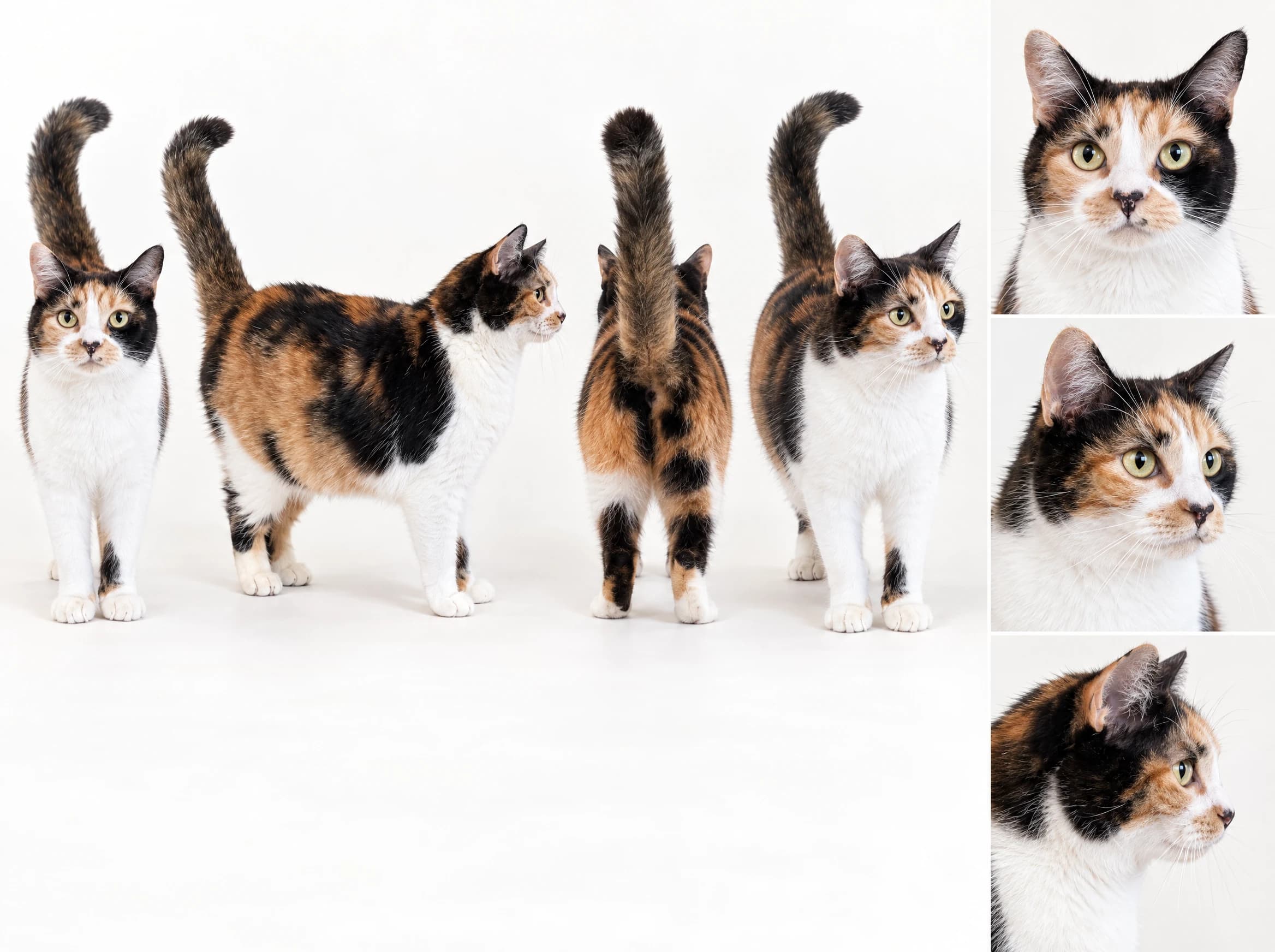
Healthy calico character sheet — @image2 in the video generation.
View full-size image — Healthy calico character sheet — @image2 in the video generation.Zombie calico
Attach the same six calico photos as @image1 through @image6, then add the approved healthy sheet shown here as @image7. The prompt keeps her identity and layout while adding cloudy eyes, pallid fur, and dry superficial decay.
@image7 — Healthy calico sheet for the zombie generation.
View full-size image — @image7 — Healthy calico sheet for the zombie generation.Original zombie-calico JSON prompt { "task": "generate_character_reference_sheet", "input": { "reference_images": [ "@image1: front face and chest", "@image2: front three-quarter head", "@image3: flank and back markings", "@image4: flank, back and tail markings", "@image5: side profile and body proportions", "@image6: standing body, paw and leg markings", "@image7: approved calico character sheet, for this same cat's exact identity, body proportions, coat pattern and seven-view layout" ], "prompt": "Create a photorealistic zombie/undead character reference sheet of this exact female calico cat. Preserve her individual identity and recognizable orange, black and white coat map from the six photos and approved character sheet while transforming her into an eerie cinematic zombie creature. Apply visible gray-green undead pallor to the skin and pale fur, desaturated rusty-orange patches, dusty matted and slightly ragged short fur, small dry cracked patches visible through sparse fur, dark hollow eye rims and milky translucent pale yellow-green eyes with faint pupils. Keep her natural sturdy rounded cat proportions and feline anatomy. The effect should be clearly undead while remaining recognizably the same calico cat. Remove the home backgrounds and objects. No accessories." }, "instructions": { "identity": "Use the same individual female calico cat from the original photos and approved character sheet in every shot, transformed into one consistent zombie version.", "appearance": "Preserve the reference cat's short fur, sturdy rounded body, orange-and-black patchwork back and flanks, white chest, underside and legs with white paws, long dark mottled tail, pale yellow-green eyes, small dark mottled nose and long white whiskers. Preserve the asymmetric face: the cat's anatomical left eye and cheek (viewer right in a frontal view) have a large black patch; the anatomical right side (viewer left in a frontal view) is mostly warm orange, with dark markings toward the outer ear/head. Preserve the central white blaze descending along the forehead and nose bridge. Preserve the dark patch above the anatomical left front paw and other visible leg markings. Use the photographs as final authority for exact patch boundaries; do not simplify into generic calico markings. Zombie transformation takes priority over the original healthy finish and eye clarity: render the white fur as pallid off-white with a sickly gray-green undertone, orange as muted rusty orange, and retain the black patches. Add visibly ragged, dusty matted short fur and a few small areas of sparse fur over dry cracked gray skin, dark sunken-looking eye rims and milky translucent yellow-green undead eyes with faint pupils. Preserve her original broad face, nose shape, white facial blaze, black anatomical-left cheek patch, sturdy rounded body, paws and entire dark mottled tail so she remains unmistakably this individual cat.", "unseen_details": "Infer details not visible in the six photos conservatively from the observed coat pattern and keep them consistent across every angle. Each angle is a rotation of one fixed individual with the same three-dimensional coat map, never a new random calico pattern or mirrored copy. The undead changes are fixed features of one cat, not independently randomized per view; keep cloudy eyes, fur condition, dry skin patches and all original coat markings at the same anatomical locations across views." }, "output": { "type": "single_composite_image", "orientation": "landscape", "aspect_ratio": "4:3", "background": "plain seamless warm-white studio backdrop", "lighting": "soft, even, consistent across all views", "text_labels": false, "rendering_style": "photorealistic cinematic creature effects presented as clean studio reference photography, detailed feline fur and convincing undead texture" }, "layout": { "main_section": { "position": "left", "width_percent": 75, "arrangement": "EXACTLY four full-body views in ONE horizontal row, ordered left-to-right front, side profile facing image right, rear, front three-quarter facing image right; scale to fit the left 75% with a single common ground line", "alignment": "consistent body scale, shoulder/head height and ground line; fit all four cat views within the left 75% with generous separation and entire tails visible", "shots": [ { "id": "full_body_front", "order": 1, "view": "front", "framing": "entire cat, including both ears, all four paws and the entire tail", "orientation": "facing directly toward camera" }, { "id": "full_body_profile", "order": 2, "view": "side profile", "framing": "entire cat, including both ears, all four paws and the entire tail", "orientation": "turned 90 degrees from front, nose pointing toward image right" }, { "id": "full_body_back", "order": 3, "view": "rear", "framing": "entire cat, including both ears, all four paws and the entire tail", "orientation": "turned 180 degrees from front, facing directly away from camera" }, { "id": "full_body_three_quarter", "order": 4, "view": "front three-quarter", "framing": "entire cat, including both ears, all four paws and the entire tail", "orientation": "turned approximately 45 degrees from front, facing toward image right" } ] }, "detail_section": { "position": "right", "width_percent": 25, "arrangement": "three vertically stacked portrait panels", "alignment": "consistent head scale and comparable crop", "shots": [ { "id": "portrait_front", "order": 1, "view": "front", "framing": "cat head and upper chest, including both ears, whole chin and whiskers", "orientation": "facing directly toward camera" }, { "id": "portrait_three_quarter", "order": 2, "view": "front three-quarter", "framing": "cat head and upper chest, including both ears, whole chin and whiskers", "orientation": "turned approximately 45 degrees from front, nose pointing toward image right" }, { "id": "portrait_profile", "order": 3, "view": "side profile", "framing": "cat head and upper chest, including both ears, whole chin and whiskers", "orientation": "turned 90 degrees from front, nose pointing toward image right" } ] } }, "pose_and_camera": { "full_body_pose": "natural standing quadruped pose on all four paws with a mildly stiff undead posture, legs comfortably spaced, tail held in a natural curve and completely visible; keep feline proportions", "expression": "eerie vacant zombie gaze, eyes open with milky translucent pale yellow-green irises and faint pupils, mouth closed; consistent in every view", "head_alignment": "head aligned with the body's rotation for each angle, including a true rear view", "perspective": "natural proportions with minimal lens distortion", "camera_roll": "level", "full_body_camera_height": "approximately the cat's mid-torso height", "portrait_camera_height": "eye level" }, "constraints": [ "Generate exactly four full-body cat views and three cat portraits.", "Show the same individual cat with the same fixed coat markings in every shot.", "Keep each cat figure separate with no overlap.", "Do not crop ears, paws or any part of the tail in full-body shots.", "Keep the entire ears, face, chin and whiskers visible in portraits.", "Maintain anatomical left and right consistently; do not mirror asymmetric facial, leg or coat details.", "Keep lighting, background, proportions and photorealistic rendering style consistent.", "Use natural feline anatomy with four legs and one tail, no anthropomorphism or accessories.", "Do not add text, labels, watermarks, panel borders, sunburst graphics or decorative elements.", "All seven views show one identical zombie transformation with consistent skin, fur and eye effects.", "Preserve the identifiable orange, black and white calico pattern and her rounded proportions beneath the undead treatment.", "Keep the creature transformation non-graphic: dry superficial decay only, with no blood, open wounds, exposed bone or missing limbs.", "Mandatory layout: four full-body views in one horizontal row on the left, all on one baseline; never two rows or a 2-by-2 grid. Three portraits are stacked vertically on the right." ] }Download the zombie-calico prompt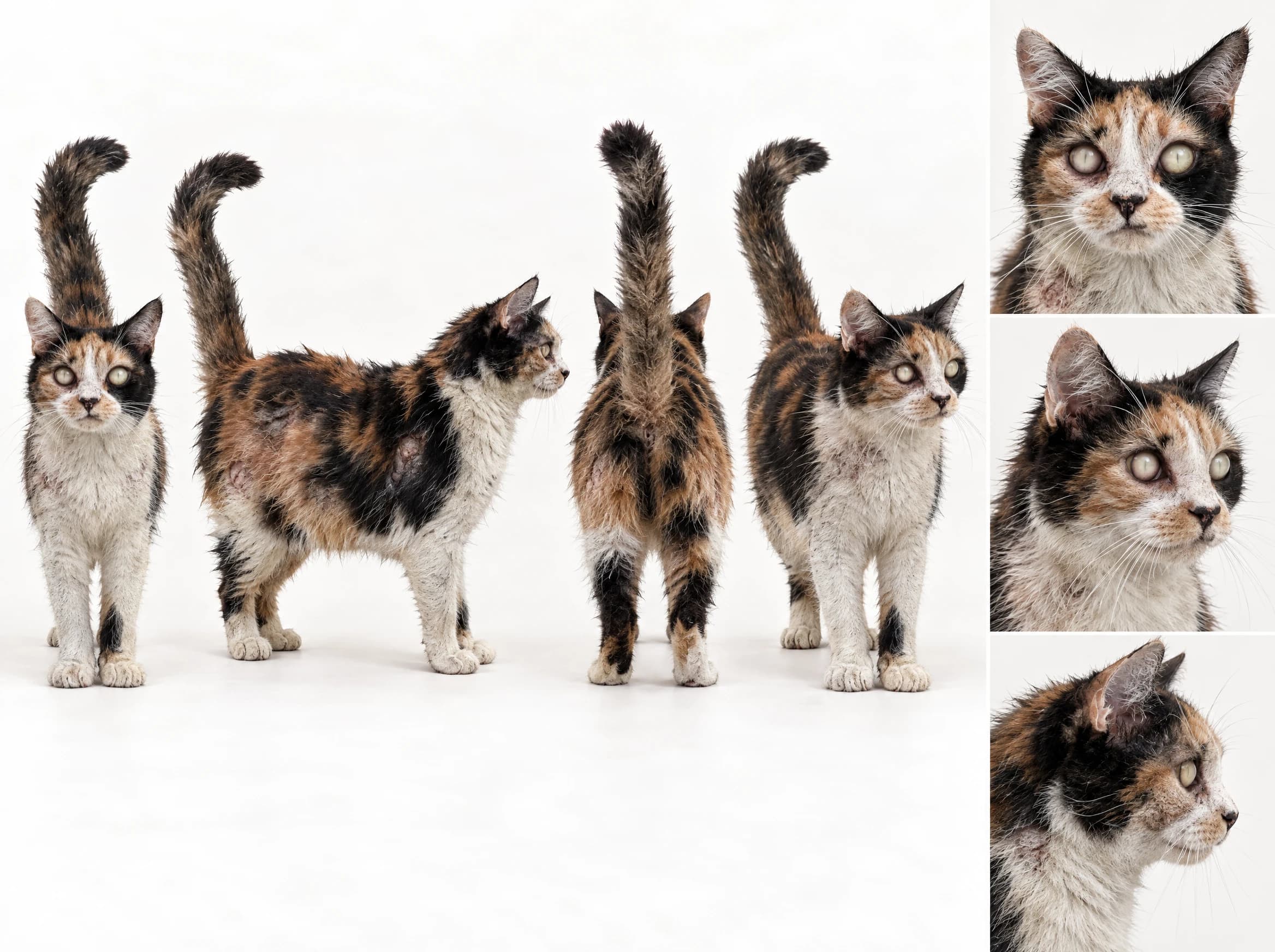
Zombie calico character sheet — @image3 in the video generation.
View full-size image — Zombie calico character sheet — @image3 in the video generation.2. Create the video
Open Higgsfield Genjutsu, choose Motion Transfer, and add the source clip and three character sheets. Use the reference map, prompt, and recorded settings below.
Source video
This is the original clip used for the motion reference. Download it from our media storage and attach it as @video1 in Higgsfield.
Original 24-second motion reference — @video1. The source clip shows a dark tortoiseshell holding a prop handgun opposite an undead cat, followed by the healthy cats outdoors.
Assign the references
For this video generation, attach the source clip as @video1 and the three finished sheets from step 1 as @image1, @image2, and @image3 in this order.
Scroll sideways to see all columns.
Mention Reference Role @video1 Original source clip Existing scene and movement @image1 Orange-tabby sheet Cat initially holding the gun @image2 Healthy-calico sheet Normal version of the second cat @image3 Zombie-calico sheet Undead version of that same second cat Video prompt
Copy the prompt below. In Higgsfield, link each @video1, @image1, @image2, and @image3 mention to its matching attachment.
Original Motion Transfer prompt use the same @video1 change the cat initially holding the gun with @image1 change the zombie with @image3 and the normal version should be @image2
Video settings
These are the settings recorded for the October 7, 2026 generation.
Scroll sideways to see all columns.
Setting Value used Feature Higgsfield Genjutsu — Motion Transfer Resolution 720p Aspect ratio 16:9 Duration 24 seconds Scene mode Off Generate audio False Generated result
The result uses the orange tabby for the first cat and the calico in her zombie and healthy states. The delivered video is 1280 × 720 and measures about 24.04 seconds. It includes audio despite the audio-generation setting.
Final Genjutsu result — 24 seconds, 720p, 16:9. The orange tabby holds a prop handgun in a dark interior facing the zombie calico with cloudy eyes. Later, the healthy calico joins the orange tabby in sunlit grass and at sunset.
Higgsfield references
Higgsfield's guide describes Motion Transfer as using movement from an existing clip to guide a new character or scene.
What you’re working toward.
Two healthy cat character sheets, a zombie version of the calico, and the finished Motion Transfer video.